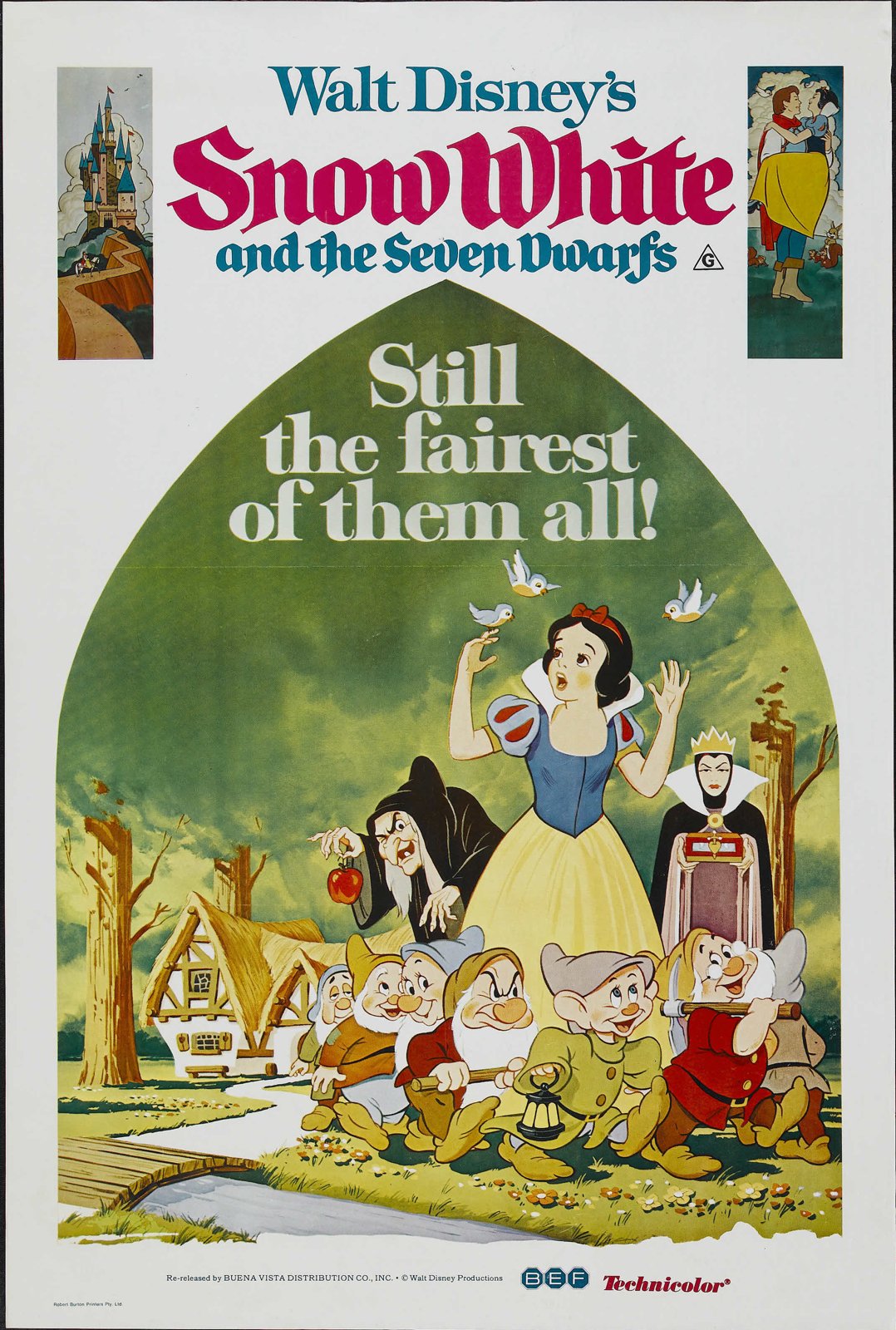
The allure of original movie posters is undeniable, transforming a simple piece of paper into a tangible fragment of cinematic history. For collectors and enthusiasts, few pieces are as iconic and coveted as those depicting Disney's inaugural animated feature: Snow White and the Seven Dwarfs. But when it comes to Authenticity & Identifying Original Snow White Posters, the journey from hopeful admirer to confident owner requires a discerning eye, a grasp of history, and an understanding of the subtle nuances that separate a priceless artifact from a clever reproduction.
The original 1937 Snow White poster, a "timeless and enchanting representation" as described by experts, captures Snow White in a delicate, graceful pose against a lush, magical backdrop. Its vibrant colors and whimsical design evoke wonder, while the subtle presence of the Evil Queen hints at the story's darker elements. This visual narrative, a teaser for a beloved tale of a kind princess escaping her jealous stepmother and finding refuge with seven dwarfs, makes the poster a true collector's gem. Yet, its popularity also makes it a prime target for forgeries and misidentification.
At a Glance: Spotting an Original Snow White Poster
- Mind the Era: True originals align with the 1937 release or very early reissues.
- Paper & Print Quality: Look for specific paper stock, printing methods (stone lithography, early offset), and dot patterns consistent with the period.
- Size Matters: Poster dimensions were standardized; deviations are red flags.
- Studio & NSS Credits: Original posters will feature RKO Radio Pictures and, for later reissues, National Screen Service (NSS) numbers.
- Folds Over Rolls: Most pre-1980s posters were folded for distribution.
- Provenance is Power: A documented history of ownership significantly boosts credibility.
- Condition's Tale: Age and handling leave natural marks; pristine condition can sometimes be suspicious.
- Seek Expert Opinion: When in doubt, a professional authenticator is invaluable.
The Undying Magic of Disney's First Feature
Before we delve into the technicalities of identification, it's crucial to appreciate what makes these posters so special. Snow White and the Seven Dwarfs, released in 1937 by RKO Radio Pictures, wasn't just a film; it was a groundbreaking cinematic achievement. It was the world's first full-length cel-animated feature film, a monumental gamble by Walt Disney that paid off spectacularly, redefining animation and establishing Disney as a creative powerhouse.
The advertising materials, including the movie posters, were designed to capture the revolutionary nature and enchanting appeal of this new art form. These early posters are not just advertisements; they are pieces of art reflecting a pivotal moment in film history. The original artwork, often depicting Snow White with her woodland friends or facing the ominous shadow of the Evil Queen, resonated deeply with audiences then and continues to captivate collectors today. Each poster, whether it's a grand three-sheet or a more common one-sheet, tells a part of that story, making its authentic identification a quest worth undertaking.
Understanding Poster Types and Their Historical Context
Original movie posters weren't a monolithic entity; they came in various shapes, sizes, and print runs, each serving a specific promotional purpose. Knowing these formats is fundamental to identifying an original Snow White poster, as a fake might get the art right but fail on the specific dimensions or markings for a given type.
The Common Formats of Original Posters:
- One-Sheet (27x41 inches, later 27x40): This is the most iconic and recognizable format. Used for display inside and outside theaters, it usually features the main artwork and credits. Many collectors focus on one-sheets due to their manageable size and iconic imagery.
- Half-Sheet (22x28 inches): Often displayed horizontally in lobbies, these typically featured more condensed artwork, sometimes without the full credit block, focusing on key characters or action scenes. They were usually printed on thicker card stock and often shipped flat.
- Insert (14x36 inches): A tall, narrow poster, also printed on card stock, commonly used in theater lobbies. These often highlighted specific elements or characters with a more minimalist design.
- Lobby Cards (11x14 inches): Sets of eight lobby cards were common, showcasing different scenes from the film. They are printed on card stock and offer a snapshot of the movie's narrative.
- Three-Sheet (41x81 inches, in two or three sections): A much larger poster, typically made up of two or three overlapping sections designed to be joined together. These were meant for outdoor display or large indoor spaces.
- Six-Sheet (81x81 inches, in four sections): Even larger than a three-sheet, these monumental posters were designed for prominent outdoor display and are exceedingly rare, especially for films as old as Snow White.
For Snow White, identifying an original means understanding which of these formats were produced in 1937 and their subsequent reissues. The specific artwork and credit blocks can vary significantly between formats and print runs, adding layers to the authentication process.
The Crucial Distinction: Original Release vs. Rereleases
Perhaps the most common pitfall in collecting vintage movie posters is confusing an original release poster with a rerelease. Snow White and the Seven Dwarfs was incredibly popular and was rereleased multiple times over the decades (1944, 1952, 1958, 1967, 1975, 1983, 1987, 1993, etc.). While rerelease posters are still vintage and can be collectible, they rarely command the same value or historical significance as an authentic 1937 first-release poster.
Key Differences to Look For:
- Date and Studio Credits:
- 1937 Original: Will feature "RKO Radio Pictures" as the distributor. There will be no NSS (National Screen Service) number visible on the poster itself, as NSS didn't begin its comprehensive numbering system until around 1940. Copyrights will clearly state 1937.
- Later Rereleases:
- Early Rereleases (e.g., 1944, 1952, 1958): These will still be distributed by RKO or, later, Buena Vista Distribution (for Disney). Crucially, they will often include an NSS number (e.g., "52/123" for a 1952 release, with "52" indicating the year). The copyright date might still reference 1937 but often includes a new copyright for the rerelease. The artwork may be similar but can have subtle changes.
- Later Rereleases (e.g., 1967, 1975 onwards): These will almost certainly be distributed by Buena Vista Distribution (Disney's own distribution arm). They will have a clear NSS number indicating the year of the rerelease. The artwork might be completely different, or a "re-imagined" version of the original, with updated typography and credit blocks.
- Artwork Variations: While some rereleases used very similar artwork, look for subtle shifts:
- Typography: Fonts used for titles and credits can change.
- Character Arrangement: Minor alterations in how characters are posed or positioned.
- Color Palette: Rereleases might have brighter, more modern color schemes due to updated printing technology.
- Rating Symbols: Later rereleases will include MPAA rating symbols (G, PG, etc.), which wouldn't exist on a 1937 original.
- Printer's Union Bug: Very early original posters might have a small, almost hidden "union bug" or printer's mark, though this isn't a universal authenticator.
It's common for sellers to mistakenly (or deliberately) list a valuable rerelease poster as an "original," so always scrutinize the specific details related to dating.
Deciphering the Art of Printing: Paper, Ink, and Dots
The physical properties of an original Snow White poster are perhaps the most telling signs of its authenticity. Printing technology in the late 1930s was vastly different from today's digital methods.
1. Paper Stock and Texture:
- Weight and Feel: Original posters, especially one-sheets and larger formats, were typically printed on a lighter, often slightly fibrous paper stock. It feels different from the smooth, often glossy, heavy-coated paper used for modern reproductions. Half-sheets and inserts, however, were on thicker card stock.
- Aging Characteristics: Over time, original paper will naturally yellow or brown, become brittle, and show signs of handling. A poster that feels too "new" or resilient for its age should raise a red flag.
- Linen-backing: Many older, valuable posters have been professionally "linen-backed" – mounted onto linen with a paper backing to preserve and restore them. This is an accepted and often desirable form of preservation, but the underlying paper must still be original.
2. Printing Method and Dot Patterns:
- Stone Lithography vs. Offset Lithography:
- Stone Lithography: The earliest and finest method, producing vibrant colors and crisp lines without visible dot patterns. While common for art prints, large-run movie posters were quickly moving to offset.
- Offset Lithography: By 1937, offset printing was standard for movie posters. This method involves transferring ink from a plate to a rubber blanket, then to the paper.
- Halftone Dot Patterns (The Magnifying Glass Test): This is a critical indicator. Use a jeweler's loupe or a strong magnifying glass (at least 10x) to examine the colored areas of the poster.
- Original 1930s Offset: You will see a distinct, coarse halftone dot pattern. These dots are usually uniform in size but vary in spacing to create different shades. The color registration might be slightly off in places, a charming imperfection of the era.
- Modern Digital Prints (Fakes/Reproductions): Modern digital printing uses an "inkjet" or "giclée" process, which produces a much finer, often stochastic (randomized) dot pattern, or sometimes no discernible dots at all, appearing as continuous tone. The colors will often look too perfect, too uniform, and lack the slight depth of older inks. Laser prints will have a very crisp, often slightly glossy, machine-perfect dot.
- Color Saturation and Ink Quality: Original inks tend to have a certain depth and opacity. While they may have faded over time, they often retain a distinct character. Modern reproductions might have overly bright, almost "fluorescent" colors, or conversely, dull, flat tones if printed cheaply.
The Imperfect Beauty: Folds, Pinholes, and Condition
Contrary to what one might assume, a perfectly pristine, rolled original poster from 1937 is almost certainly a reproduction.
- Folds: Original movie posters were almost universally folded by the studios for economical distribution to theaters. One-sheets were typically folded twice horizontally and twice vertically, creating eight panels. If a Snow White one-sheet is presented as an "original" but is entirely rolled and lacks any central fold lines (even if flattened by linen-backing), it's a huge red flag.
- Pinholes and Edge Wear: Posters were tacked up in theaters. Minor pinholes in corners, slight edge wear, or even small tears are common and expected signs of genuine use and age. Excessive damage can reduce value, but some minor imperfections lend credibility.
- Restoration: Many valuable posters have undergone professional restoration to repair tears, fill paper loss, and touch up color. This is acceptable and often necessary, but ethical sellers will always disclose restoration. A perfectly "flawless" un-restored poster from 1937 is extremely rare.
The Paper Trail: NSS Numbers and Studio Markings
Beyond the visual aesthetics, administrative markings on the poster provide crucial evidence.
- National Screen Service (NSS) Numbers: As mentioned, NSS became the primary distributor of movie posters for Hollywood studios starting around 1940. Original 1937 Snow White posters will not have an NSS number. However, subsequent rereleases will. An NSS number typically looks like "XX/YYY" (e.g., "52/123"), where "XX" is the year of the poster's release (or rerelease) and "YYY" is the studio's internal code for the film. For instance, a 1952 Snow White one-sheet might have "52/123" printed on the bottom border. This is a definitive way to date a rerelease.
- Studio Emblems and Copyrights: Ensure the copyright information clearly states "Copyright 1937 Walt Disney Productions" and the distributor is "RKO Radio Pictures, Inc." Be wary of missing or altered copyright information.
- Printer's Markings/Codes: Sometimes, small, almost invisible printer codes or numbers can be found on the bottom border, which can help experts trace the print run.
The Menace of Fakes: Spotting Reproductions
The market for vintage movie posters is unfortunately rife with reproductions, ranging from innocent decorative prints to deceptive forgeries.
Common Types of Reproductions:
- Modern Reprints/Facsimiles: These are openly sold as reproductions, often for decorative purposes. They are usually printed digitally on glossy paper, lack the distinct fold lines of originals, and often come in slightly altered sizes. They rarely attempt to mimic the subtle details of original printing.
- Deceptive Fakes/Bootlegs: These are created to intentionally mislead buyers. They might try to mimic the original paper quality, artificially age the paper, or even attempt to replicate fold lines. However, they almost always fail the "magnifying glass test" (modern digital dots vs. vintage halftone dots) and often have slightly off colors or dimensions. Some even try to fake NSS numbers or copyright information, but inconsistencies often give them away.
- Restored Fakes: This is a particularly insidious type where a reproduction is printed and then "restored" to hide its modern origins, sometimes even mimicking paper damage or fold wear. This is where professional authentication becomes absolutely essential.
The Unseen Story: Provenance and Expert Verification
Beyond the physical characteristics of the poster itself, the "story" behind it can be equally important.
The Power of Provenance:
- Chain of Ownership: Knowing the poster's history – who owned it, where it was acquired, how long it's been in a collection – can add immense credibility. Did it come from a former theater employee? A known collector's estate? Documentation like old receipts or auction records can be invaluable.
- Reputable Dealers: Purchasing from established, highly reputable vintage poster dealers significantly reduces the risk of acquiring a fake. These dealers have a reputation to uphold and expertise in authentication.
When to Call in the Experts:
- Professional Authentication Services: For a significant investment, especially for a high-value item like an original Snow White poster, hiring a professional authenticator is a wise decision. These experts have deep knowledge of printing techniques, studio distribution, and the specific nuances of various poster releases. They can spot details that even an experienced collector might miss. They also have access to databases of genuine poster characteristics.
- Gallery Certificates of Authenticity (COA): A COA from a reputable dealer or auction house carries weight. Be wary of generic COAs from unknown sources. The value is in the reputation of the issuing entity.
Safeguarding Your Treasure: Preservation and Care
Once you've identified and acquired an original Snow White poster, proper care is paramount to preserving its value and condition.
- Avoid Direct Sunlight: UV light is the enemy of vintage paper and ink, causing fading and deterioration.
- Acid-Free Materials: Store your poster in acid-free archival sleeves or have it professionally linen-backed with acid-free materials.
- Stable Environment: Keep it in a climate-controlled environment, away from extreme temperature fluctuations or high humidity, which can promote mold and foxing.
- Professional Framing: If framing, use archival-quality matting and UV-protective acrylic or glass. Ensure the poster is not permanently mounted or glued.
Navigating the Market: Common Pitfalls and Smart Strategies
Entering the market for vintage movie posters, especially for something as iconic as Snow White, can be daunting. Here’s how to approach it smartly:
- Educate Yourself Relentlessly: Read guides, examine images of known authentic posters, and familiarize yourself with the nuances of each rerelease. The more you know, the less susceptible you are to misinformation.
- Start Small: If you're new to collecting, don't jump straight to a five-figure Snow White original. Begin with less expensive vintage posters to hone your eye and understanding of paper, print, and condition.
- Question Everything: If a deal seems too good to be true, it almost certainly is. Be skeptical of sellers who lack detailed descriptions, provide poor-quality photos, or avoid specific questions about provenance or printing details.
- Utilize Online Resources (Carefully): While sites like Etsy or eBay can feature posters, they also host numerous reproductions. Always apply the critical identification techniques discussed here. Compare listings to images from reputable auction houses or dedicated movie poster archives.
- Visit Reputable Dealers and Auctions: These are your safest bets. You can often inspect posters in person, and the dealers have a vested interest in selling authentic items. For a broad look at various iconic posters, including those from Disney's early animation, you might explore a Disney Snow White poster collection online through reputable gallery sites. This can help you visually train your eye on what to expect from authentic pieces.
- Build Relationships: Connect with experienced collectors or join online communities. Their collective wisdom can be an invaluable resource.
Your Journey to Authenticity
Identifying an original Snow White and the Seven Dwarfs movie poster is a rewarding challenge. It's a blend of historical detective work, an appreciation for the mechanics of printing, and a keen visual sense. There’s no single, foolproof trick, but rather a combination of factors that, when assessed together, paint a clear picture of authenticity.
By understanding the distinct characteristics of 1937 originals versus rereleases, scrutinizing paper and print quality, recognizing standard poster formats, and valuing documented provenance, you empower yourself. You transform from a mere observer into a knowledgeable collector, ready to distinguish the genuine magic of a piece of cinematic history from an imitation. The quest for an original Snow White poster isn't just about owning a piece of art; it's about holding a tangible connection to the dawn of animated storytelling, a treasure that continues to enchant generations.