The History And Evolution Of Snow White's Movie Posters
Long before streaming queues and digital billboards, the primary herald of a cinematic event was the movie poster. And for a film as utterly groundbreaking as Walt Disney’s Snow White and the Seven Dwarfs, these pieces of art weren't just advertisements; they were the first glimpse into a magical new world. The History and Evolution of Snow White Posters tells a fascinating tale, not just of changing artistic styles, but of shifts in marketing, audience expectations, and the enduring power of a timeless classic. You're about to dive into how these vibrant, iconic images introduced, re-introduced, and re-imagined the "fairest of them all" to generations, from its premiere right up to its last major theatrical run.
At a Glance: The Poster's Journey
- Early Years (1937-1938): Emphasized revolutionary animation, vibrant color, and the film's status as the "first full-length animated feature."
- Wartime & Re-releases (1940s-1950s): Adapted to changing times, often promoting the film as a needed escape or a cherished return, featuring evolving character prominence.
- The Buena Vista Era (1950s-1980s): Consolidated iconic imagery and slogans, leveraging nostalgia and the film's established place in popular culture.
- Anniversaries & Modernity (1980s-1990s): Introduced special commemorative designs, experimented with new printing technologies, and targeted specific marketing demographics.
- Artistic Evolution: From hand-painted detailed scenes to more stylized, graphic designs, reflecting broader trends in illustration and advertising.
- Marketing Shifts: How taglines and focus points changed to appeal to new generations while retaining the core magic.
The Dawn of a Legend: Initial Release and Early Advertising (1937-1938)
Imagine the buzz in late 1937. Walt Disney was attempting something unprecedented: a feature-length animated film. The stakes were incredibly high. When Snow White and the Seven Dwarfs premiered on December 21, 1937, it wasn't just a movie; it was an event. The general release followed on February 4, 1938, across the United States, and with it came the first wave of promotional posters.
These initial posters were crucial. They had to convince a skeptical public that an animated film could hold their attention for over an hour, convey emotional depth, and offer a truly immersive experience. They were vibrant, often showcasing the entire cast—Snow White, the Prince, the Evil Queen (both regal and as the Witch), and, of course, the distinctive personalities of the seven dwarfs. Early designs often highlighted the film's revolutionary use of Technicolor, promising an explosion of color previously unseen in animation. You'd see phrases like "Walt Disney's Folly," ironically turned into a badge of honor, or "The one that started it all."
The artistry was meticulously detailed, reflecting the film's own painstaking hand-drawn animation. These posters weren't just advertisements; they were works of art in themselves, embodying the magic and wonder that the film promised. If you look at a Snow White poster collection from this period, you'll immediately grasp the intricate detail and rich palettes used to draw audiences into its groundbreaking world.
Navigating Wartime and Revivals: The 1940s and 1950s RKO Re-releases
The power of Snow White was so immense that it became a critical asset during challenging times. Its first major re-release came swiftly in the summer of 1940, as part of "The Great Walt Disney Festival of Hits." This bundled the feature with beloved shorts like Ferdinand the Bull and Ugly Duckling. The marketing strategy here was about value and variety, presenting a package of beloved Disney entertainment, a testament to the film's already established popularity.
RKO Takes the Helm: Adapting to Changing Times
As World War II raged, Snow White offered much-needed escapism and cheer. The film's re-release on February 22, 1944, managed by RKO, came with a new set of slogans. "The show thrill of a lifetime!" beckoned audiences, while the dwarfs famously proclaimed, "We’re back to fill your heart with happiness again!" This messaging clearly tapped into the public's desire for comfort and joy during a period of immense global stress. The posters often emphasized the dwarfs' playful nature and Snow White's inherent goodness, framing the film as a heartwarming tonic.
The 1952 Revival: Dopey's Moment in the Spotlight
Fast forward to February 13, 1952. Another RKO re-release saw a distinct shift in focus. Posters from this era frequently gave prominent placement to Dopey, arguably the most universally endearing of the dwarfs. This highlights a subtle but significant evolution in theatrical poster design—the realization that specific, beloved characters could drive attendance.
The accompanying slogan leaned heavily into the film's musical legacy: “See one of the all time greats! Hear the all time song hits “Whistle While You Work” Heigh Ho” “Some Day My Prince Will Come”.” This cleverly reminded audiences not just of the story, but of the unforgettable songs that had become ingrained in the cultural fabric. It's a clear signal of the film's enduring popularity and its growing status as a classic. Understanding the release date history provides crucial context for appreciating how each re-release wasn't just a rerun, but a carefully calibrated re-introduction.
The Buena Vista Era Begins: Cementing Iconography (1958-1983)
With Walt Disney Productions taking over distribution themselves through Buena Vista Distribution, the marketing of Snow White entered a new phase, characterized by leveraging its established iconic status.
Buena Vista's First Flourish: "Heigh Ho, We're Back!" (1958)
The first Buena Vista re-release on February 7, 1958, marked a significant moment. The slogan, "Heigh Ho, Heigh Ho We’re back! Here it is – That wondrous masterpiece of sheer delight, for you and your family to see and enjoy, again and again!", perfectly encapsulated the film's return. It played on the familiarity of one of its most famous songs, inviting both nostalgic adults and new generations of children.
These posters often featured a classic ensemble shot, emphasizing the film's heartwarming quality and universal appeal. The artwork remained vibrant, but perhaps a touch more polished, reflecting mid-century design sensibilities while still retaining the original's charm. It’s here you start to see the evolution of Disney's marketing strategies towards selling the experience as much as the movie itself.
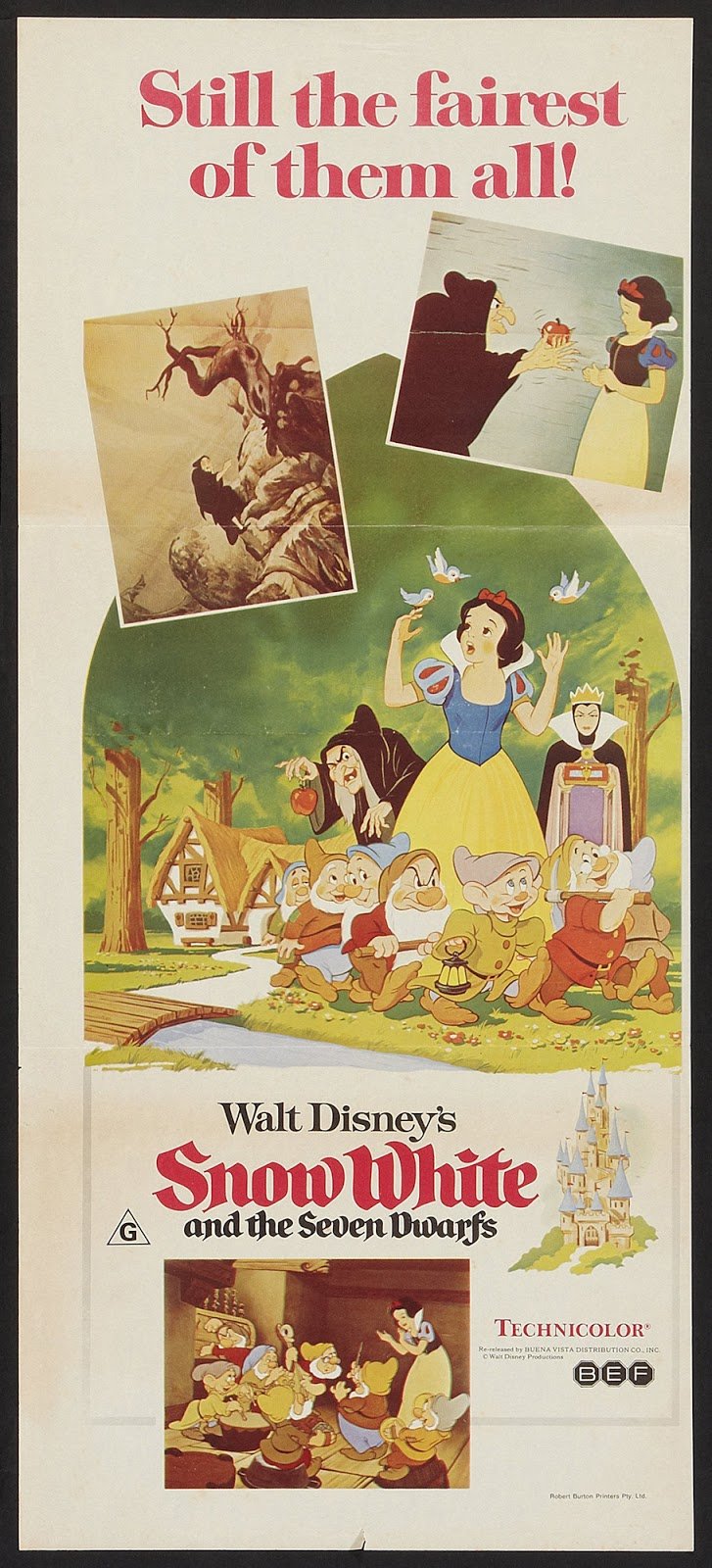
The Unforgettable Slogan: "...still the fairest of them all!" (1967, 1975, 1983)
Perhaps the most enduring and recognizable slogan in Snow White poster history arrived with the June 11, 1967, re-release: "...still the fairest of them all!". This tagline was a stroke of genius, succinctly summarizing the film's timeless appeal and undisputed quality. It acknowledged the passage of time since its original debut, yet confidently asserted its continued supremacy.
This slogan was so effective, it was reused for subsequent re-releases on December 20, 1975, and July 15, 1983. The posters from these periods often shared visual similarities, reinforcing the iconic status of the film with consistent branding. They typically featured Snow White prominently, often with the dwarfs or other key characters surrounding her, using a more stylized, graphic approach than the earliest, more illustrative designs. The 1983 re-release visuals were, in fact, very similar to the previous one, relying on the strength of the established imagery. Interestingly, a Spanish-language version for the North American market included a "50th anniversary" badge, hinting at upcoming celebrations.
Anniversary Grandeur and Modern Touches: The Late 1980s and 1990s
As Snow White approached its half-century mark, Disney pulled out all the stops, combining nostalgic reverence with innovative marketing.
The Golden Jubilee: 50th Anniversary Extravaganza (1987)
The 50th anniversary re-release on July 17, 1987, was a global celebration. The North American poster for this milestone event featured a distinctive portrayal of Snow White in a pink dress—a design rarely seen in primary marketing but present in color tests and some 1938 French posters. This choice added a fresh, celebratory feel while still connecting to the film's deep roots. The 50th-anniversary banner was often highlighted with gold foil, adding a touch of luxury and prestige, emphasizing the film’s legendary status.
This period also saw broader marketing tie-ins. An additional poster was produced specifically for McDonald’s restaurants, signaling a trend towards cross-promotional campaigns that would become standard for major film releases. These posters were designed to be instantly recognizable, often featuring simplified, cleaner lines, appealing to a contemporary audience while still evoking classic Disney magic. For collectors, these anniversary posters, especially those with special finishes, represent a unique period in the film's collecting vintage movie posters history.
The Final Theatrical Run: Mylar, Mystery, and Majesty (1993)
The last general re-release of Snow White and the Seven Dwarfs in the United States in the 20th century occurred on July 2, 1993. This re-release again showcased how poster design could evolve to create new excitement for an old classic.
A pre-release poster from this era famously used mylar to simulate a magic mirror effect. This innovative use of material immediately made the poster stand out, creating an interactive element that teased the film's central conflict with the Evil Queen. It was a clever, tactile way to engage audiences before they even stepped into the theater.
Another classic poster produced for this re-release reserved significant space for the Queen, often depicting her in her imposing, regal form. This intentional emphasis underscored the timeless battle between good and evil, a core element of the story. By highlighting the villain, Disney’s marketing team aimed to re-engage audiences with the narrative's dramatic tension, proving that even after decades, the film's darker elements could still captivate. This strategic focus reflected an understanding of the cultural impact of the film and its ability to resonate on multiple emotional levels.
Beyond the Marquee: What These Posters Tell Us
The journey through the various Snow White movie posters is more than a simple timeline of advertisements; it's a fascinating look at how a beloved classic was kept alive and relevant for generations. Each poster, with its chosen artwork, color palette, and tagline, was a deliberate attempt to capture the zeitgeist of its era while upholding the timeless appeal of the film.
Key Takeaways from This Evolution:
- Adaptability is Key: From wartime morale boosters to nostalgic family fare and anniversary celebrations, the film's marketing continually adapted its message to fit the cultural context.
- Visual Storytelling: The posters show a clear progression from highly detailed, illustrative artwork mimicking the film's style to more graphic, simplified designs over time, reflecting broader trends in commercial art.
- Character Focus: The emphasis on different characters (the ensemble, Dopey, the Queen) highlights strategic choices to appeal to various aspects of the film's charm or drama.
- The Power of Slogans: Iconic taglines like "...still the fairest of them all!" demonstrate how a few well-chosen words can encapsulate the enduring legacy of a film.
- Technological Innovations: The use of mylar in the 1993 poster shows an embrace of new printing and design technologies to create fresh appeal.
These posters are not just historical artifacts; they are windows into the evolving relationship between a film, its audience, and the cultural landscape it inhabits. They remind us that even the most cherished stories need to be re-introduced and re-contextualized for each new generation, carefully balancing tradition with innovation.
The next time you encounter a Snow White poster, take a moment to appreciate the decades of artistic and marketing thought behind it. It's not just an image; it's a piece of history, an invitation to a timeless fairy tale that has captivated hearts for over 80 years.